
The Gambia
Nov 24th - Dec 04th, 2027
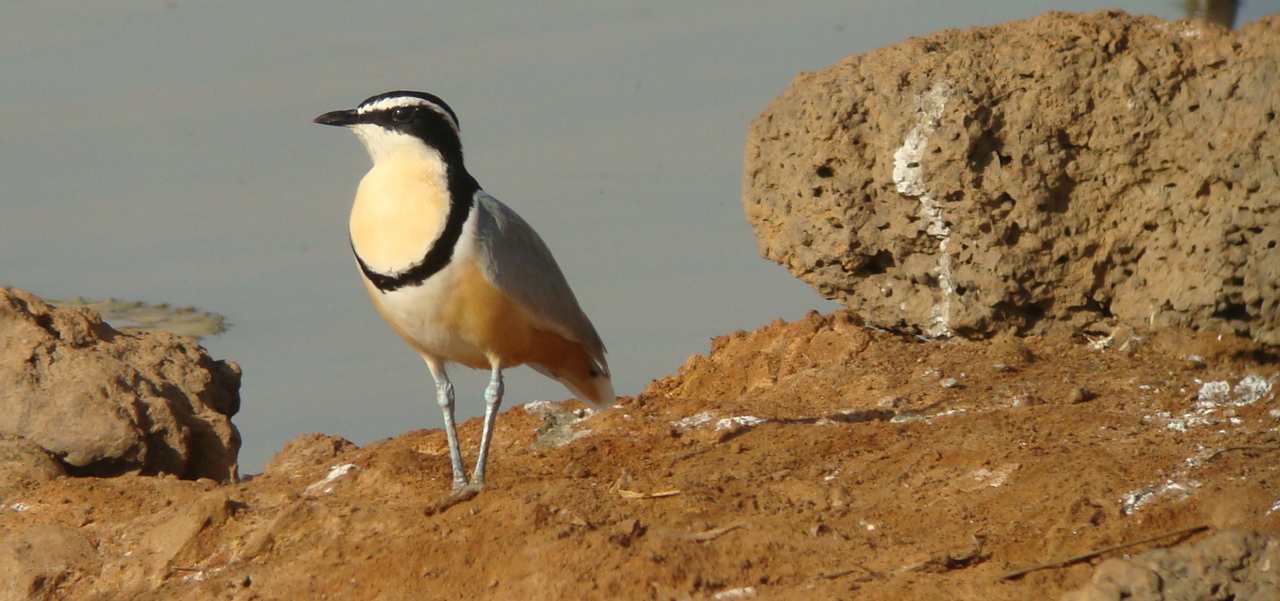
The Gambia is one of Africa’s most rewarding and accessible birdwatching destinations — a tiny, welcoming country with an extraordinary concentration of species and habitats. Often called the Smiling Coast of West Africa, it has recorded more than 570 bird species packed into an area little larger than Yorkshire, giving it one of the highest bird diversities per square kilometre anywhere on the continent. Situated on the Atlantic coast and surrounded by Senegal, this narrow country follows the mighty Gambia River inland for nearly 200 miles, making travel effortless and placing an impressive range of habitats within easy reach. Our 11‑day tour is timed for just after the wet season, when the landscape is still green, wetlands are full, and many weavers and bishops remain in bright summer plumage. With Europe’s migrants arriving and local specialities at their peak, this is one of the most productive periods of the year. We explore Atlantic coastal scrub, sandy beaches, lagoons, mangroves, riverine forest, wetlands, woodland savannah, and the vast Gambia River system itself — all guided by The Gambia’s number one bird guide, whose local knowledge and fieldcraft elevate every day in the field. We base ourselves at the Senegambia Beach Hotel, one of the country’s best, with its own beach, swimming pool, and extensive gardens alive with colourful, confiding birds. From here, daily excursions take us to the country’s richest birding areas, including the famous Abuko Nature Reserve. A highlight of the tour is our inland journey to Tendaba, where a special boat trip through the mangroves gives us a real chance of finding the elusive African Finfoot, and nearby wetlands offer the opportunity to see the much‑sought‑after Egyptian Plover. Birding highlights may include Martial Eagle, Red‑throated Bee‑eater, Northern Carmine Bee‑eater, and a wide range of Afrotropical species alongside many European migrants. Combined with rural villages, bustling markets, riverside communities, and the country’s famously warm hospitality, this itinerary provides an exceptional introduction to tropical birding in West Africa. It is an ideal first step into African birdwatching — This tour offers a deeply rewarding experience for seasoned birders and beginners alike.
ITINERARY:
Day 1 – Arrival Day – Banjul International Airport, The Gambia – 24th Nov
Plan your arrival today to arrive at Banjul International Airport (BJL). After clearing immigration and collecting luggage, we will meet our local guide and make the short drive to our Hotel, set in the quiet coastal community of Bijilo. The hotel’s gardens, mature trees and beachfront location provide an excellent first taste of Gambian birdlife, and depending on arrival times there may be opportunities for introductory birding around the grounds. Species such as Red‑eyed Dove, Yellow‑billed Kite, Long‑tailed Glossy Starling, and Senegal Coucal are often seen within minutes of settling in, offering a relaxed start to the tour. We enjoy time to unwind, explore the hotel surroundings, and prepare for the days ahead as the warm Atlantic breeze and calls of the local birdlife set the tone for our Gambian adventure.
Overnight Bijilo. D
Day 2 – Brufut Woods & Tanji Bird Reserve – 25th Nov
Our first full day takes us to two of the most productive birding sites on the Gambian coast, beginning in the cool early hours at Brufut Woods Community Project. Managed by WABSA in partnership with the local community, this protected fragment of coastal woodland is one of the last intact blocks of mature forest along the shoreline. In December the vegetation is still green from the wet season, with fruiting trees, flowering shrubs and shaded forest floors attracting a rich mix of species. As we walk the sandy trails beneath tall mahogany and silk‑cotton trees, we search for Long‑tailed Nightjar, Verreaux’s Eagle‑Owl, and the brilliant Splendid Sunbird feeding in sunlit gaps. The woodland supports an exceptional range of West African forest birds, including Swallow‑tailed Bee‑eater, Guinea Turaco, African Paradise Flycatcher, Bruce’s Green Pigeon, Northern Yellow White‑eye, African Pied Hornbill, Violet Turaco, Grey Woodpecker, and African Harrier‑Hawk drifting overhead. More widespread species such as Red‑eyed Dove, Piapiac, Long‑tailed Glossy Starling, Senegal Coucal, and Yellow‑billed Kite are also regular here, adding to the diversity of the morning. December brings Palearctic migrants into the forest edges, and species such as Western Olivaceous Warbler often move quietly through the mid‑storey. Green Vervet Monkeys and Gambian Sun Squirrels are frequent sightings, contributing to the lively feel of this forest patch. After lunch we continue to the Tanji Bird Reserve, a dynamic mosaic of coastal scrub, tidal lagoons, mangroves and open shoreline stretching toward Bald Cape and the offshore Bijol Islands. The afternoon tide often produces superb shorebird watching, with Eurasian Whimbrel, Common Redshank, Common Greenshank, Grey Plover, and mixed flocks of gulls and terns feeding along the water’s edge. The lagoons attract Pink‑backed Pelican, Great White Pelican, a variety of herons, and raptors such as Red‑necked Falcon, Dark Chanting‑Goshawk, and Black Kite. More common coastal species such as Speckled Pigeon, Laughing Dove, Senegal Thick‑knee, and Black‑headed Heron are often encountered as we explore the reserve. The scrub and mangrove margins hold many colourful species including African Pygmy Kingfisher, Yellow‑crowned Gonolek, Western Bluebill, and several different finches and weavers. December can be excellent for both migrating passerines and wintering European species, with Common Nightingale, Eurasian Blackcap, and Common Redstart all possible. Offshore, Atlantic Bottlenose Dolphins are occasionally seen beyond the breakers, rounding off a day that showcases two of the most varied and rewarding birding habitats on the Gambian coast.
Overnight Bijilo. B,L,D
Day 3 – Kartong Bird Sanctuary & Observatory – 26th Nov
Today we travel south toward the Senegal border to explore Kartong Bird Sanctuary, one of the most varied and productive birding landscapes in The Gambia. The Kartong Bird Observatory is positioned between freshwater wetlands, reedbeds, seasonally flooded marsh, dry woodland, coastal dunes and the open Atlantic shoreline. This remarkable concentration of habitats within a small area makes Kartong one of the country’s premier sites for resident species, inter‑African migrants and wintering Palearctic birds. The wetlands immediately surrounding the observatory hold an impressive range of waterbirds. Pools and marshes support African Swamphen, the scarce Allen’s Gallinule, Black Crake, African Jacana, Intermediate Egret, Black‑headed Heron, Squacco Heron, Purple Heron, Great Egret, and Little Egret. Open water often attracts White‑faced Whistling Duck, Spur‑winged Goose, Knob‑billed Duck, and African Pygmy Goose, while muddy edges can produce Wood Sandpiper, Common Snipe, Little Stint, Common Ringed Plover, Black‑winged Stilt, and Marsh Sandpiper. Larger waders such as Eurasian Curlew, Common Greenshank, Common Redshank, and Grey Plover are regular, and flocks of Caspian Tern, Sandwich Tern, and Black Tern may be seen moving along the coast. Kartong is also one of the best locations in The Gambia for kingfishers, with up to six species possible in a single day. These include Malachite Kingfisher, African Pygmy Kingfisher, Blue‑breasted Kingfisher, Woodland Kingfisher, Pied Kingfisher, and the huge Giant Kingfisher. Their presence reflects the richness of the wetland system and provides superb photographic opportunities. Raptors are frequently seen overhead, taking advantage of the open vistas and abundant prey. Species may include Osprey, Palm‑nut Vulture, African Harrier‑Hawk, Shikra, Grey Kestrel, Lanner Falcon, Black Kite, and Hooded Vulture. The surrounding woodland and scrub also support Senegal Coucal, Red‑eyed Dove, African Grey Hornbill, Long‑tailed Glossy Starling, Yellow‑billed Kite, Common Bulbul, Northern Crombec, Little Weaver, Black‑necked Weaver, and Yellow‑fronted Canary. Reedbeds and thickets hold wintering Palearctic warblers such as Western Olivaceous Warbler, Common Chiffchaff, Eurasian Reed Warbler, Sedge Warbler, and Eurasian Blackcap. The dunes and shoreline add yet another dimension, with chances of Western Reef Heron, Eurasian Whimbrel, Bar‑tailed Godwit, Sanderling, and Grey‑headed Gull, while offshore scanning can produce Atlantic Bottlenose Dolphin and occasionally even Pantropical Spotted Dolphin. As with many observatories, surprises are always possible. Kartong has produced several national rarities over the years, including unexpected Palearctic vagrants and scarce Afrotropical species, making every visit exciting and unpredictable. After spending most of the day exploring the observatory recording area and its surrounding habitats, we will head to our hotel.
Night Gunjur B, L, D
Day 4 – Pirang Shrimp Ponds & Bah’s Hide – 27th Nov
This morning we head inland to the Pirang Shrimp Ponds, another important wetland birding sites in The Gambia. Once used for aquaculture, the vast network of ponds has been reclaimed by nature and now forms a rich mosaic of shallow pools, mudflats, grassy margins and open water. In December, water levels vary across the site, creating a dynamic mix of habitats that attract exceptional numbers of waterbirds, shorebirds and raptors. The open ponds often hold impressive concentrations of large wetland species and one of the main targets we hope to encounter is the Black‑crowned Crane. Other species can include Greater Flamingo, Lesser Flamingo, African Spoonbill, Eurasian Spoonbill, Great White Pelican, Pink‑backed Pelican, Yellow‑billed Stork, African Sacred Ibis, Hadada Ibis, Spur‑winged Goose, White‑faced Whistling Duck, and Knob‑billed Duck. Herons and egrets are abundant, with Black‑headed Heron, Grey Heron, Purple Heron, Squacco Heron, Little Egret, Western Cattle Egret, and Great Egret all possible. Pirang is famous for its shorebirds, and depending on water levels, the muddy edges can be superb. Species may include Little Stint, Curlew Sandpiper, Bar‑tailed Godwit, Black‑tailed Godwit, Marsh Sandpiper, Wood Sandpiper, Common Greenshank, Common Redshank, Common Ringed Plover, Black‑winged Stilt, Pied Avocet, and Common Snipe. The site can easily produce 70–100 species in a single visit, and the variety changes throughout the day as birds move between feeding areas. Raptors are often seen overhead, and regularly include Osprey, Western Marsh Harrier, Long‑crested Eagle, Black‑winged Kite, Yellow‑billed Kite, Hooded Vulture, and Palm‑nut Vulture. The ponds are also excellent for gulls and terns, with Slender‑billed Gull, Grey‑headed Gull, Caspian Tern, Gull‑billed Tern, and Whiskered Tern all possible. The surrounding scrub and dry woodland add yet more diversity, with species such as Black‑faced Firefinch, Little Weaver, Black‑necked Weaver, Northern Red Bishop, Bronze Mannikin, Red‑eyed Dove, Senegal Coucal, Common Bulbul, Long‑tailed Glossy Starling, and Piapiac often encountered as we move between ponds. Crested Lark is also regular in the drier, sandy areas. After a productive morning, we travel to Sita Joyeh, Baobab Island for lunch, a peaceful spot surrounded by mature baobabs and open savannah, often with Yellow‑fronted Canary, White‑billed Buffalo‑Weaver, and Speckled Pigeon nearby. We then continue to the nearby Bah’s Hide, one of the country’s premier bird photography locations. This shaded hide overlooks a small waterhole where birds come to drink during the heat of the afternoon. Sitting quietly here can be magical, with species such as Black‑billed Wood‑Dove, Spotted Honeyguide, Greater Honeyguide, Black‑rumped Waxbill, Lavender Waxbill, Common Redstart, Northern Crombec, and Little Greenbul visiting regularly. The surrounding woodland is also home to Greyish Eagle‑Owl and Northern White‑faced Owl, both of which are occasionally seen roosting nearby. By late afternoon and another species-rich day we will return to our hotel.
Night Sita Joyeh. B, L, D
Day 5 – Pirang – Tendaba – 28th Nov
Following an early breakfast, we begin our journey inland toward Tendaba, travelling east along the Gambia River as the scenery shifts from coastal woodland to open savannah, rice fields and scattered villages. This is a rewarding travel day, with several planned birding stops at productive wetlands, roadside pools and small photography hides. As we move through farmland and lightly wooded savannah, we may encounter Abyssinian Roller, Blue‑bellied Roller, Bearded Barbet, Vieillot’s Barbet, White‑billed Buffalo‑Weaver, Northern Red Bishop, Yellow‑crowned Bishop, Fork‑tailed Drongo, Senegal Batis, Grey‑backed Camaroptera, Northern Puffback, African Palm Swift, and flocks of Red‑billed Quelea moving across the fields. Bridges and areas with water often hold African Pied Wagtail, while open plains may produce Grey Kestrel, Hooded Vulture, Black‑headed Heron, and Yellow‑fronted Canary. As we travel further inland, the riverine influence becomes more pronounced, with broad floodplains and mangrove‑lined channels appearing beside the road. Depending on water levels, which are still strongly tidal even at this distance from the coast, we may be able to take our Tendaba boat trip upon arrival. If conditions are not suitable, we will sail the following morning when the tide is favourable. We expect to reach Tendaba Camp during the afternoon, with time to settle in and enjoy the river views before tomorrow’s exploration.
Night Tendaba B, L, D
Day 6 – Tendaba – 29th Nov
Today is devoted to the famous Tendaba area, widely regarded as the heart of Gambian birding. The combination of expansive floodplains, mangrove channels, riverine woodland, and open savannah makes this one of the most productive regions in the entire country. A major highlight is our boat exploration of the intricate mangrove creeks and channels of the lower Gambia River. These quiet waterways offer some of the most atmospheric birding of the tour, with shaded channels, overhanging roots, and secluded pools where specialist species hide. With luck, we may encounter two of the region’s most sought‑after birds, the African Finfoot and White‑backed Night Heron, both of which favour dense mangrove cover and are typically seen only with patient searching. The wider Tendaba area supports an impressive range of large waterbirds and raptors. We hope to find Goliath Heron, African Darter, Yellow‑billed Stork, and African Woolly‑necked Stork, along with several kingfisher species, that include Blue-breasted, Malachite, Pied and Giant. Shorebirds are sometimes numerous here, especially along exposed mudbanks and creek edges. Species may include Eurasian Whimbrel, Common Greenshank, Common Sandpiper, and the characterful Senegal Thick‑knee, often found standing motionless among the shoreline stones. Beyond the mangroves and waterways, the landscape offers an entirely different cast of species. As we explore the surrounding woodland edges and savannah, we may encounter Senegal Batis, Northern Puffback, Grey‑backed Camaroptera, Black‑crowned Tchagra, Fork‑tailed Drongo, White‑shouldered Black‑Tit, and colourful species such as Abyssinian Roller, Blue‑bellied Roller, Bearded Barbet, and Vieillot’s Barbet. The more open areas and farmland can produce White‑billed Buffalo‑Weaver, Northern Red Bishop, Yellow‑fronted Canary, Cut‑throat Finch, and Black‑rumped Waxbill, while scrubby forest edges may hold Grey‑headed Kingfisher, Northern Black Flycatcher, and Piapiac. Raptors can also be found, such as Montagu’s Harrier, alongside African Fish Eagle, Grey Kestrel, and Hooded Vulture. After a full day exploring this rich and varied region, we return to our accommodation in Tendaba.
Night Tendaba B, L, D
Day 7 – Kaur & Egyptian Plover – 30th Nov
Today we will travel further upriver where the landscape opens into broad sandbanks, dry floodplains and exposed river margins, creating ideal habitat for our main target, the Egyptian Plover, one of Africa’s most iconic and beautifully patterned birds. The Kaur region also supports a distinctive upriver bird community not often encountered elsewhere on the tour. Along the river edges we may find Kittlitz’s Plover, Three‑banded Plover, Little Ringed Plover, Common Ringed Plover, and Temminck’s Stint, while the open sandbars can hold African Skimmer and White‑fronted Plover. Dry savannah and scrub around Kaur may produce species such as Chestnut‑backed Sparrow‑Lark, Rufous‑crowned Roller, White‑crested Helmetshrike, Brown‑rumped Bunting, Bush Petronia, Black‑bellied Bustard, and the scarce Savile’s Bustard, giving this upriver zone a distinctly Sahelian feel. At Solomon’s Waterhole, a productive inland photography site, species may include Lavender Waxbill, Red‑cheeked Cordon‑bleu, Black‑faced Firefinch, Western Violet‑backed Sunbird, White‑breasted Cuckooshrike, and Yellow‑breasted Apalis, along with visiting doves and finches drawn to the water, making another very varied day of our tour.
Night at Bansang B, L, D
Day 8 – Return Towards the Coast – 01st Dec
Our westward journey provides a relaxed day of birding with numerous productive stops across changing habitats. The open country and roadside savannah often deliver a superb variety of raptors, including Grasshopper Buzzard, Booted Eagle, Wahlberg’s Eagle, African Hawk‑Eagle, Lizard Buzzard, and Dark Chanting‑Goshawk, all more frequently encountered upriver than on the coast. Colourful species brighten the journey, with possibilities such as Swallow‑tailed Bee‑eater, Little Bee‑eater, Red‑throated Bee‑eater, European Bee‑eater, Broad‑billed Roller, and Purple Roller, while scattered woodland patches may hold White‑throated Bee‑eater, White‑breasted Cuckooshrike, Black Scimitarbill, Yellow‑breasted Apalis, and Brown‑rumped Bunting. Open fields and dry scrub can produce Namaqua Dove, African Collared Dove, Chestnut‑crowned Sparrow‑Weaver, Bush Petronia, Sahel Bush‑Sparrow, and Black‑bellied Bustard, while riverine edges may reveal African Jacana, Knob‑billed Duck, or White‑faced Whistling Duck. Time permitting, we will revisit key locations from the outward journey to look for any species missed earlier, making this a wonderfully varied transition day as we move back toward the coast.
Night Sita Joyeh B, L, D
Day 9 – Abuko Nature Reserve & Lamin – 02nd Dec
Abuko protects one of the last remaining areas of true gallery forest in The Gambia and was the country’s first designated nature reserve. Its tall canopy, shaded pools and dense understorey support a rich mix of forest specialists, including Violet Turaco, Guinea Turaco, African Grey Hornbill, African Pied Hornbill, Western Plantain‑eater, Black Crake, Giant Kingfisher, African Darter, and Black‑crowned Night Heron. The forest interior is excellent for skulkers, with species such as Grey‑headed Bristlebill, Snowy‑crowned Robin‑Chat, Grey Tit‑Flycatcher, Western Bluebill, Little Greenbul, Brown‑throated Wattle‑eye, and Yellow‑crowned Gonolek often heard before they are seen. Overhead, Palm‑nut Vulture frequently drifts above the forest, and Abuko remains one of the best places to encounter Western Red Colobus, a signature mammal of the reserve. Later we visit the superb rice fields, vegetable plots and wetlands around Lamin, a wonderfully productive community‑managed landscape where growers allow us to walk among their cultivation areas. These irrigated fields attract an exceptional range of birds, often in abundance. Likely species include African Jacana, Black Crake, African Sacred Ibis, Black Heron, Little Heron, Squacco Heron, Black‑headed Heron, and a wide selection of wading birds such as Wood Sandpiper, Marsh Sandpiper, Little Stint, Common Snipe, Common Ringed Plover, and Kittlitz’s Plover. The surrounding scrub and farmland may hold Malachite Kingfisher, Blue‑breasted Kingfisher, Little Bee‑eater, Red‑throated Bee‑eater, Splendid Sunbird, Variable Sunbird, Village Weaver, Black‑necked Weaver, and Yellow‑backed Weaver, making this another diverse and rewarding area.
Night Gunjur B, L, D
Day 10 – Marakissa – 03rd Dec
Today we enjoy a relaxed exploration of the varied habitats around Marakissa River Camp, a superb inland site where woodland, farmland, wetland and village edges come together to produce an exceptional diversity of birds. The lightly wooded areas and farm tracks often hold species such as White‑breasted Cuckooshrike, Red‑shouldered Cuckooshrike, Brubru, White‑crested Helmetshrike, Fine‑spotted Woodpecker, Golden‑tailed Woodpecker, and Grey‑headed Woodpecker, while more open patches may reveal Northern Black Chat, White‑crowned Robin‑Chat, Pygmy Sunbird, and Yellow‑crowned Gonolek. The farmland edges and scattered scrub can produce Double‑spurred Francolin, Black‑rumped Waxbill, Lavender Waxbill, Red‑cheeked Cordon‑bleu, and Bush Petronia, while wet areas around the river and ponds may hold African Jacana, Black Crake, Little Bee‑eater, Malachite Kingfisher, Blue‑breasted Kingfisher, Squacco Heron, and Black Heron. Marakissa is also well known for its excellent photographic opportunities, with many species approachable as they forage around the cultivation plots and water margins. After lunch at Marakissa River Camp, we return to the coast for a relaxed evening.
Night Gunjur B, L, D
Day 11 – Kotu Creek & Departure – 04th Dec
Our final day focuses on the famous Kotu Creek area, including Kotu Bridge, the golf course wetlands and nearby rice fields. This compact zone regularly produces an impressive list of species, often exceeding 80 in a single morning, and offers excellent chances to connect with birds we may not yet have encountered. Likely species include Blackcap Babbler, White‑billed Buffalo‑Weaver, Bronze Mannikin, Yellow‑billed and Woodchat Shrike, Northern Puffback, Green Woodhoopoe, Greater Painted Snipe, Wood Sandpiper, Spur‑winged Lapwing, Pearl‑spotted Owlet, Yellow‑fronted Tinkerbird, Red‑cheeked Cordon‑bleu, and a superb selection of sunbirds including Splendid Sunbird, Variable Sunbird, Beautiful Sunbird, Collared Sunbird, and the mangrove specialist Mangrove Sunbird. The mix of mangroves, tidal mud, freshwater pools and rice fields ensures a constant turnover of species. Kotu is also one of the best places on the tour to appreciate dragonflies and butterflies, which we will take time to observe. Regular dragonflies include Banded Groundling, Red‑veined Dropwing, Orange‑winged Dropwing, Blue Emperor, and African Skimmer, while butterflies may include African Monarch, Plain Tiger, Blue Pansy, Common Grass Yellow, Citrus Swallowtail, and Guinean Fritillary. These add colour and interest to the day and provide superb photographic opportunities around the creek margins and flowering shrubs. This varied and lively area provides a fitting conclusion to our Gambian birding adventure, with a final chance to enjoy the richness of coastal wetlands before heading to the airport in time for your international departure – B, L
tour details
Species of interest
Leaders: Howard Vaughan & Tamba Jefang
Tour price: £2,995
Single supplement: £TBA
Deposit: £500
Group size: Minimum for tour to go ahead – 4, max – 8
Included in cost: Accommodation in twin rooms en-suite, all meals from dinner on 24th Nov to lunch on the 04th Dec, airport transfers, ground transport throughout, all park entrance fees, boat trips, water, and services of English-speaking leaders, and local guides
Not included: International airfare, insurance, drinks, tips, and items of a personal nature.
Accommodation: Most of the hotels and lodges are of a good standard and offer en-suite rooms, and a good variety of meals.
Highlights:

Egyptian Plover
Black-crowned Crane
White-crested Helmet Shrike
Violet Turaco
White-shouldered Black Tit
Senegal Thick-knee
Spotted Honeyguide
Lavender Waxbill
Pink-backed Pelican
Allen’s Gallinule
Red-necked Falcon
Black Crake
Pearl-spotted Owlet
White-backed Night Heron
African Pygmy Goose
Kittlitz’s Plover
Red-shouldered Cuckooshrike
Cut-throat Finch
Brown-rumped Bunting
Grasshopper Buzzard
Western Red Colobus
African Finfoot
Savile’s Bustard
Verreaux’s Eagle‑Owl
Blue-breasted Bee-eater
White-bellied Bustard
Guinea Turaco
Palm-nut Vulture
Greater Painted Snipe
Long-crested Eagle
African Pygmy Kingfisher
Yellow-crowned Gonolek
Yellow-billed Stork
Bearded Barbet
Blue-bellied Roller
Black-bellied Bustard
Black Heron
African Pied Hornbill
Goliath Heron
African Fish Eagle
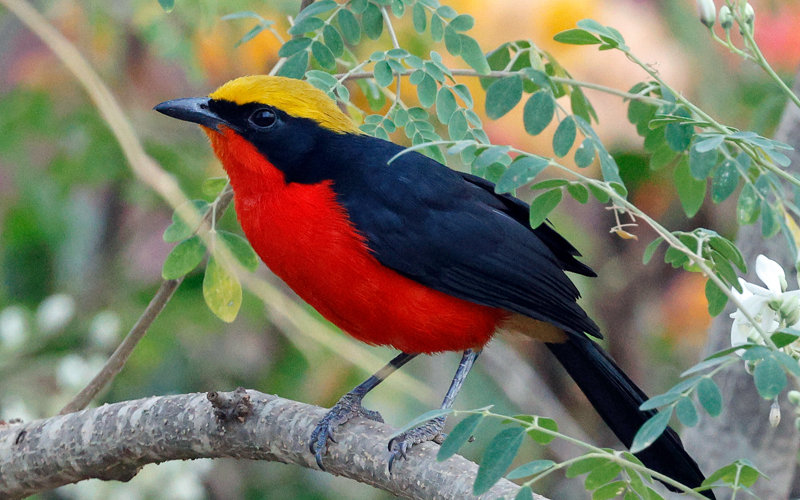
Red-throated Bee-eater
Western Bluebill
Tour Code: This tour focuses on seeing some very sought after and iconic species in The Gambia. An easy destination with ample photo opportunities of many colourful African birds. This tour represents the perfect getaway from your cold winter.
Once the tour is confirmed to go ahead, we will send you information about booking your flights. Please do not book flights until you receive this information from us.
Final payment will be due 90 days before start of tour.
Please note rules and regulations are constantly changing so you will need to check with Country and Governmental guidelines. At present we will all have to abide by safety rules and protocols set by the Government of the country we are visiting; this may include wearing of masks and hand sanitizing especially within restaurants and public areas. If any of these rules are required you will need agree and adhere to this before we can accept you on a Bird’s, Wildlife & Nature Tour.
All details concerning what to bring, airport transfers, health, wildlife checklists etc will be sent out once the tour is confirmed and we have received your final balance.
Insurance: We strongly recommend that you take out adequate travel insurance to protect you against any unforeseen event including travel delay, injury or illness prior to or during the tour. Note to check if your insurance covers you against expenses incurred due to contracting Covid-19 either before or during the tour.
Click on the booking form above to reserve your place on this tour
This tour is being run through – Bird’s, Wildlife & Nature LTD
44 Courtland Crescent, Plymouth, Devon UK PL7 4HL
For more information. Contact:
Tel: Tom 07481 843971 Tel: Steve 07780 965129
Outside UK – Tom +44 7481 843971 Steve – +44 7780 965129
