


Southern Costa Rica
March 10th - 21st, 2027
To compliment our already famous Ultimate Costa Rica Tour, we have now developed our new Southern Costa Rica Tour. Our tour focusses entirely on the South and not just part of the south. Other companies offer the south but still include areas in the central and north that most people having visited Costa Rica will have already done. This is important as you don’t really want to repeat areas they have already done. So here we go! On this fabulous tour to Costa Rica’s southern Pacific slope and Talamanca highlands one of the most biologically diverse regions on Earth. A place where lush cloud forests cloak the mountains, mangroves pulse with tidal life, and lowland rainforests hold some of the country’s most beautiful birds. This special itinerary, led by our fabulous local guide Jose Pablo Castillo, will search coastal wetlands and transitional forests, plus the cool, epiphyte-laden highlands of the Talamanca Range. We will explore the wild Osa Peninsula, and stay in some lovely, conservation-minded, family run lodges that protect critical habitat and offer exceptional birding right outside your door. There are birds that only occur in the south of Costa Rica including the endemic Black-cheeked Ant-Tanager, and Paint-billed and Ocellated Crake, Rosy-Thrush-Tanager, Veraguan Mango and Sapphire-bellied Hummingbird to name just a few. Join us on the next great Costa Rican adventure.
ITINERARY:
Day 1 – Arrival day – March 10th
Note that this is an arrival day in San Jose and after a short transfer to our hotel there may be opportunities to bird the lodge grounds. Airport transfer included.
Night at Robledal Hotel.
Day 2 – Dominical area on the Pacific Coast – March 11th
A pre-breakfast walk around the Robledal gardens will quickly add some of the dry central valley specialities such as Hoffmans Woodpecker, Ferruginous Pygmy Owl, Spot-breasted Oriole, Cinnamon Hummingbird, noisy Finsch’s Parakeets and Yellow-naped Amazon. After breakfast we will cross the capital city of San Jose and after a little over an hour, we will finally see the Pacific Ocean. As we make our way along the coast we will see many of the common marine and coastal species, such as the Magnificent Frigatebird, Brown Pelican, Royal Tern, and Laughing Gulls. If we are lucky, a strategic stop or two may find a Wandering Tattler feeding among the rocks or maybe a Brown Booby drift by. Other birds on the beach or in the mangrove areas could include Hudsonian Whimbrel, Willet, Western Osprey, as well as small numbers of sandpipers and plovers. As we continue on towards our hotel located in the mid-Pacific, we will transition through multiple ecosystems which are very interesting and productive. From dry forest to very humid forests of the southern Pacific, we can keep a look out for White-tailed Kite, Scarlet Macaws, Fiery-billed and Collared Aracaris, Roseate Spoonbill, Black-bellied Whistling Duck, Turquoise-browed Motmot and possibly Double-striped Thick-knee. As we reach the Pacific lowlands we will encounter a world of different flora and birdlife. We will visit a feeding station that is well known for the number and diversity of species that drop in, and hopefully we can see the Fiery-billed Aracari, the species that gives the place its name, as well as regional specialties such as Costa Rican Swift, the rare White-crested Coquette, plus Long-billed Starthroat, Collared Trogon, Isthmian Wren and Speckled Tanager. On reaching our hotel we will see that it is located in an elevated area from which you can see the best sunsets in the entire southern Pacific.
Night at Cristal Ballena . B, L, D
Day 3 – Day around the lodge trails and local feeders – March 12th
We shall spend the day wandering the Cristal Ballena lodge trails where over 450 species have been recorded. Cristal Ballena sits in a beautifully elevated position above the Pacific, surrounded by lush gardens, forested slopes and sweeping views that make it an exceptionally pleasant place to spend a full day in the field. The lodge’s extensive trail system winds through a mosaic of coastal foothill forest, open clearings and fruiting trees, creating a habitat mix that has produced an impressive 450+ recorded species. As we wander the trails, we’ll be listening for the soft calls of Baird’s Trogon in the shaded ravines and watching for the vibrant flashes of Scarlet Macaws as they move between feeding sites along the coastal plain. The area is also excellent for toucans and aracaris, with both Fiery‑billed Aracari and Chestnut‑mandibled Toucan often appearing in the canopy. Mixed flocks can be lively here, bringing a colourful blend of tanagers, honeycreepers and woodcreepers through the mid‑storey, while the forest edges may reveal manakins, antbirds and the occasional trogon perched quietly in the gloom. The gardens themselves are productive, attracting hummingbirds such as Charming Hummingbird, Long‑billed Starthroat and Scaly‑breasted Hummingbird, and raptors may include Short‑tailed Hawk, Gray‑lined Hawk and the possibility of a soaring King Vulture. The coastal foothills also support a healthy range of other wildlife, from butterflies drifting along the sunny paths to lizards and small mammals moving through the undergrowth. Cristal Ballena offers a relaxed yet rewarding day of birding.
Night at Cristal Ballena . B, L, D
Day 4 – Puerto Jimenez on the Osa peninsular – March 13th
Puerto Jiménez places us at the gateway to the Osa Peninsula, one of the most biologically intense regions on Earth and a landscape where the forest feels deeper, richer and more alive than almost anywhere else in Costa Rica. Here the lowland rainforest presses right up to the edge of town, and as we explore the surrounding tracks, river margins and forest trails we’ll be immersed in a world of towering trees, dense understory and constant movement. The Osa is famous for harbouring some of the country’s most localized and charismatic species, and although many of the true South Pacific specialities will be targeted later around Buenos Aires, this region offers its own suite of treasures. Scarlet Macaws are a daily spectacle, drifting loudly over the canopy, while Black‑cheeked Ant‑Tanager — one of Costa Rica’s rarest endemics — is a signature bird of the peninsula’s forest interior. The humid lowlands also support species such as Baird’s Trogon, Golden‑naped Woodpecker, Red‑capped Manakin, Orange‑collared Manakin, Black‑hooded Antshrike and a wealth of wrens, antbirds and flycatchers that thrive in the dense vegetation. Raptors are a constant presence, with Double‑toothed Kite, King Vulture and the possibility of a soaring hawk‑eagle above the forest ridges. Beyond birds, the Osa is alive with wildlife: troops of monkeys move through the canopy, peccaries rustle through the leaf litter, and the region’s extraordinary diversity of butterflies, frogs and reptiles adds colour and energy to every walk. Puerto Jiménez offers a vivid introduction to the wild character of the peninsula — a place where the rainforest feels ancient and untamed, and where every step brings the possibility of encountering something rare, unexpected or spectacular.
Night at Osa Peninsular . B, L, D
Day 5 & 6 – Piedras Blancas National Park – March 14th & 15th
On leaving the Osa we shall set up base for two days to explore the jungle delights of the Piedras Blancas National Park. With roadside birding, trails and gardens we will search for the endemic Black-cheeked Ant Tanager along with Golden-naped and Red-crowned Woodpeckers, Tropical Royal Flycatcher, Orange-collared Manakin and almost all species of enigmatic Hermit Hummingbirds. Today we venture out to the surrounding areas including the Rincón River bridge where early morning can see us looking for the dazzling Turquoise Cotinga, alongside the equally sought after Yellow-billed Cotinga. Nearby it might be possible to find the endemic Mangrove Hummingbird and in and around wetland ponds and farmland we can look for White-throated Crake, American Pygmy Kingfisher, Red-breasted Meadowlark, a variety of seedeaters and both Crested and Yellow-headed Caracaras, plus other special birds such as Riverside Wren and Charming Hummingbird. Surrounded by beautiful mountains, we will check some mature woodlands where we can expect more enticing species such as Baird’s Trogon, Black-hooded Antshrike, Blue Dacnis, Spot-crowned Euphonia, Chestnut-backed Antbird, White-throated Shrike-Tanager, White-necked Puffbird, Black-faced Antthrush, Marbled Wood-quail, Scarlet Macaw and Red-lored Amazon.
Nights Golfito
Day 7 – Golfito/ Neily area – March 16th
Today offers a wonderfully varied day of birding as we leave the forested lowlands around Golfito and move into the semi‑urban landscapes, rice fields, oil‑palm plantations and forested hillsides surrounding Neily. This region sits at the southern tip of Costa Rica, close to the Panamanian border, and its mix of habitats creates a rich mosaic of species found nowhere else in the country. We will be in open areas for much of the day, so sun protection is essential. As we approach Neily, we begin exploring the shaded backroads, gardens and forest edges that fringe the town. These quieter areas are excellent for understory specialists such as Bare‑crowned Antbird, Rosy Thrush‑Tanager and Sepia‑capped Flycatcher, while mixed flocks often move through the mid‑storey, bringing a lively blend of tanagers, woodcreepers and flycatchers. The tall emergent trees on the surrounding hillsides are ideal for scanning canopy dwellers including Turquoise Cotinga, toucans, aracaris and the impressive White‑necked Puffbird. Open gardens and roadside scrub can be surprisingly productive, offering chances for Veraguan Mango, Crested Oropendola, Brown‑throated Parakeet, Pearl Kite, Red‑rumped Woodpecker, Sapphire‑throated Hummingbird, Smooth‑billed Ani, Fork-tailed Flycatcher Lesser Elaenia, Streaked Saltator and the diminutive Olivaceous Piculet. The Sapphire‑throated Hummingbird is a particular highlight, as this species has only recently crossed the border from Panama and is now relatively common in this small corner of Costa Rica, yet absent from the rest of the country. From here we move into the expansive rice fields and oil‑palm plantations that make Neily famous among birders. These open habitats are excellent for Savanna Hawk, Lesser Yellow‑headed Vulture, Paint‑billed Crake, Yellow‑breasted Crake, and with luck we can find the enormous Jabiru Stork striding through the wetlands. The same open meadows and skies are ideal for raptor watching, with Swallow‑tailed Kites drifting overhead and the possibility of Zone‑tailed Hawk or even a passing hawk‑eagle or King Vulture. The combination of accessible habitats, local specialties, and the relaxed pace of exploration makes Neily one of the most rewarding birding areas in southern Costa Rica, offering a rich snapshot of the region’s biodiversity within a single, memorable day.
Night Neily B, L, D
Day 8 – Wilson Botanical Gardens – March 17th
Today we will visit the Wilson Botanical Gardens which is a training and research hub for scientists studying tropical botany, conservation and reforestation with over 3,000 plant species and one of the world’s largest collections of palms. A significant diversity of birds (over 425 species), butterflies (800 species), and mammals (over 100 species) has been recorded here. The gardens themselves offer a beautifully immersive day of birding, blending lush ornamental plantings with mature forest, shaded trails and sweeping views across the San Vito foothills. As we wander through the gardens and adjoining forest, we’ll be surrounded by an extraordinary diversity of tropical flora, from towering bamboo stands and heliconia thickets to fruiting trees that draw in a colourful array of birds. The area is particularly well known for its mixed flocks which include a good variety of tanagers, such as Golden‑hooded, Speckled and Bay‑headed Tanagers alongside woodcreepers, foliage‑gleaners and flycatchers. The forest edges and shaded paths are excellent for spotting trogons, manakins and hummingbirds, with chances of White‑crested Coquette, Snowy‑bellied Hummingbird, Garden Emerald and the ever‑active Rufous‑tailed Hummingbird. The gardens themselves can be surprisingly productive, attracting Lesson’s Motmot, Masked Tityra, honeycreepers, Bran-coloured Flycatcher, Black-chested Jay, Yellow-bellied Tyrannulet, Southern Beardless-Tyrannulet, Scaled Pigeon, Velvety Manakin and Costa Rican Brush Finch and a variety of migrant warblers. Deeper in the forest, we may encounter more secretive species such as antbirds, Great and Little Tinamous, and the occasional forest raptor drifting overhead. Beyond the birdlife, Wilson Botanical Garden is alive with other wildlife: agoutis often forage quietly along the paths, lizards bask on sunlit rocks, and the diversity of butterflies is exceptional, with swallowtails, morphos and delicate hairstreaks frequenting the flowering borders. The curated botanical collections and wild forest makes this a wonderfully varied place to explore, offering both easy birding around open garden spaces and more exciting encounters along the forest trails. A full day here provides a rich, relaxed immersion into the biodiversity of southern Costa Rica. Night Neily B, L, D
Day 9 – Buenos Aires – March 18th
Buenos Aires is a destination that every dedicated birdwatcher in Costa Rica hopes to visit, yet few ever do. Remote, quiet, and far from the country’s main tourist routes, it offers a unique blend of pineapple plantations, indigenous territories, open grasslands, scrubby edges, riverine thickets, and protected lowland forest. This mosaic of habitats supports some of the most elusive and sought‑after species in the entire country. Most of the birds we will be searching for today are rarely seen by visiting birders, and even many local birdwatchers have never encountered them. To maximise our chances, we will be accompanied by an expert local guide who knows the terrain intimately and understands exactly where these rarities hide. Among grassy patches that fringe the plantations, we will listen carefully for the distinctive call of the tiny, secretive Ocellated Crake, a species that is far more often heard than seen. The nearby thickets are home to the brilliantly coloured Rosy Thrush‑Tanager, a deep‑cover specialist that rewards patience, quiet movement, and careful observation. Continuing our exploration of the varied landscapes around Buenos Aires de Osa, our primary focus will be on the region’s South Pacific specialities. Quiet forest margins and shaded ravines provide ideal habitat for the endemic Baird’s Trogon, while other species nearby could include Red‑crowned Ant‑Tanager, Thick‑billed Seed‑Finch, Ruddy‑breasted Seedeater, and the striking Scarlet‑thighed Dacnis. Open fields and roadside wires often host the elegant Fork‑tailed Flycatcher, a species that adds a touch of drama to the landscape with its long, flowing tail. Throughout the day, the wider landscape remains alive with movements of parrots and parakeets commuting overhead, raptors circling on warm thermals, and mixed flocks passing through the scattered woodland. Rare species, varied habitats, and the thrill of searching for genuinely elusive birds makes Buenos Aires one of the most memorable and rewarding places to spend a full day in the field.
Night Buenos Aires B, L, D
Day 10 & 11 – San Isidro area & Talamanca mountain range – March 19th & 20th
We return to the southern mountains. In the San Isidro del General area, we find mid-altitude mountain areas similar to the Wilson Garden ecosystem, but at a distance of 150 km, so that the bird species of the south change in abundance from one place to another. The Talamanca mountain range is the area with the highest endemism in all of Costa Rica, with more than 50 species found only in the southern mountainous region and a small corner of western Panama. For this reason, we will visit two feeding stations, as well as the trails and gardens of the hotel. In the mornings and afternoons, it is always very productive to spend some time road birding. Today we head to the Talamanca Reserve Lodge which provides a wonderfully peaceful finale to our journey, set deep within the Chirripó Biological Corridor and bordering the vast wilderness of Chirripó National Park, with more than 1,600 hectares of pristine cloud forest, the lodge sits in one of Costa Rica’s most atmospheric highland habitats, where cool mist drifts through the canopy and the forests echo to the sounds of birdsong. During our time here we will explore the reserve’s beautifully maintained trails, each offering a chance to encounter the extraordinary diversity that has produced more than 300 recorded bird species on site. The lodge’s feeders are a constant source of colour and movement, drawing in Red‑headed Barbets, Lesson’s Motmot, White‑ruffed Manakin, Spangle‑cheeked Tanager, and three species of euphonia — Elegant, White‑vented and Spot‑crowned — all offering superb views. The forest supports a rich mix of highland specialties, including Northern Emerald‑Toucanet, Black Guan, Spotted Wood‑Quail, Buff‑fronted Quail‑Dove, and the dazzling Golden‑browed Chlorophonia, while fruiting trees often attract Silver‑throated, Bay‑headed, Golden‑hooded and Scarlet‑rumped Tanagers moving through in lively mixed flocks. Hummingbird diversity is excellent, with chances of Talamanca Hummingbird, Fiery‑throated Hummingbird, White‑throated Mountain‑gem, Scintillant Hummingbird, Lesser Violetear and possibly Green‑fronted Lancebill along the trails. The forest canopy may reveal the superb Ornate Hawk‑Eagle, as well trogons, furnariids, warblers, orioles and tanagers.
Night at Talamanca Reserve B, L, D
Day 12 – Departure to airport – March 21st
Today after breakfast we will make our way back to San Jose Airport where we expect to arrive around lunch-time, ready for your international departing flights. Do not book any flights that depart earlier than 15.30pm. B,L
Tour Details
SPECIES of interest
Leaders: Howard Vaughan, Tom Bird & Local Guide
Tour price: £4,875
Single supplement: £695
Deposit: £500
Group size: Minimum for tour to go ahead – 6
Included in cost: Accommodation in twin rooms en-suite, all meals from dinner on 10th March to Breakfast on 21st of March, airport transfers, ground transport throughout, all park entrance fees, water, and services of English-speaking leaders and the best driver in Costa Rica (Ramon).
Not included: International airfare, insurance, drinks, tips, and items of a personal nature.
Accommodation: All hotels are of a good standard and offer en-suite rooms, and a good variety of meals.
Highlights:
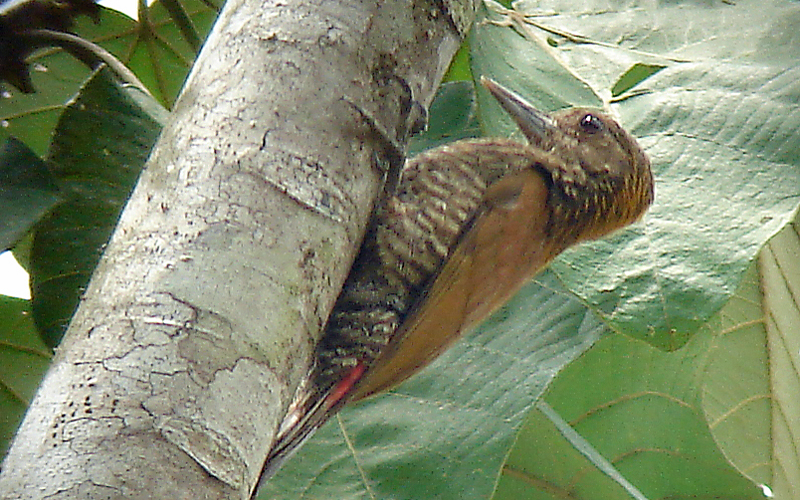

Black-cheeked Ant Tanager
Yellow-billed Cotinga
White-crested Coquette
Sapphire-throated Hummingbird
Ocellated Crake
Fiery-billed Aracari
Costa Rican Brushfinch
Red-crowned Ant-Tanager
Baird’s Trogon
Black-chested Jay
Mangrove Hummingbird
Red-rumped Woodpecker
Charming Hummingbird
Streaked Saltator
Pearl Kite
Yellow-breasted Crake
King Vulture
Rosy Thrush Tanager
Paint-billed Crake
Veraguan Mango
Speckled Tanager
Long-billed Starthroat
Fiery-throated Hummingbird
Spotted Wood-Quail
Crested Oropendola
Isthmian Wren
Snowy-bellied Hummingbird
Swallow-tailed Kite
Fork-tailed Flycatcher
Golden-browed Chlorophonia
Red-headed Barbet
Ruddy-breasted Seedeater
Marbled Wood-Quail
Scarlet Macaw
Tour Code: After over 40 tours to this fabulous country, we have now designed our new Southern Costa Tour to compliment our already famous regular Ultimate Tour. Along with our regular driver, who is expert at finding things like Ornate Hawk Eagle and Laughing Falcon, we will be in good hands. Even though our main focus is the birdlife, Costa Rica offers so much more often ignored by other companies. So a trip with us will see many wonderful targeted special birds but also a good list of mammals, butterflies, reptiles and we even take our own moth light. This is truly a nature lovers paradise and home from home for us!
This tour will be booked on a first come first come first serve basis with confirmed places held on receipt of a deposit. Once we receive your deposit and completed Booking Form, we will send you a receipt of money paid and also your balance due date. Please note that once the tour has been confirmed with sufficient numbers to run, then your deposit becomes non-refundable as at this point both us and our local agents will have started administrative work and payments forwarded for local agent services.
Once the tour is confirmed to go ahead, we will send you information about booking your flights. Please do not book flights until you receive this information from us.
Final payment will be due 90 days before start of tour.
All details concerning what to bring, airport transfers, health, wildlife checklists etc will be sent out once the tour is confirmed and we have received your final balance.
Insurance: We strongly recommend that you take out adequate travel insurance to protect you against any unforeseen event including travel delay, injury or illness prior to or during the tour. Note to check if your insurance covers you against expenses incurred due to contracting Covid-19 either before or during the tour.
Click on the booking form above to reserve your place on this tour
This tour is being run through – Bird’s, Wildlife & Nature LTD
44 Courtland Crescent, Plymouth, Devon UK PL7 4HL
For more information. Contact:
Tel: Tom 07481 843971 Tel: Steve 07780 965129
Outside UK – Tom +44 7481 843971 Steve – +44 7780 965129
