
Senegal and the Sahel Specialities
Jan 08th - Jan 24th, 2028
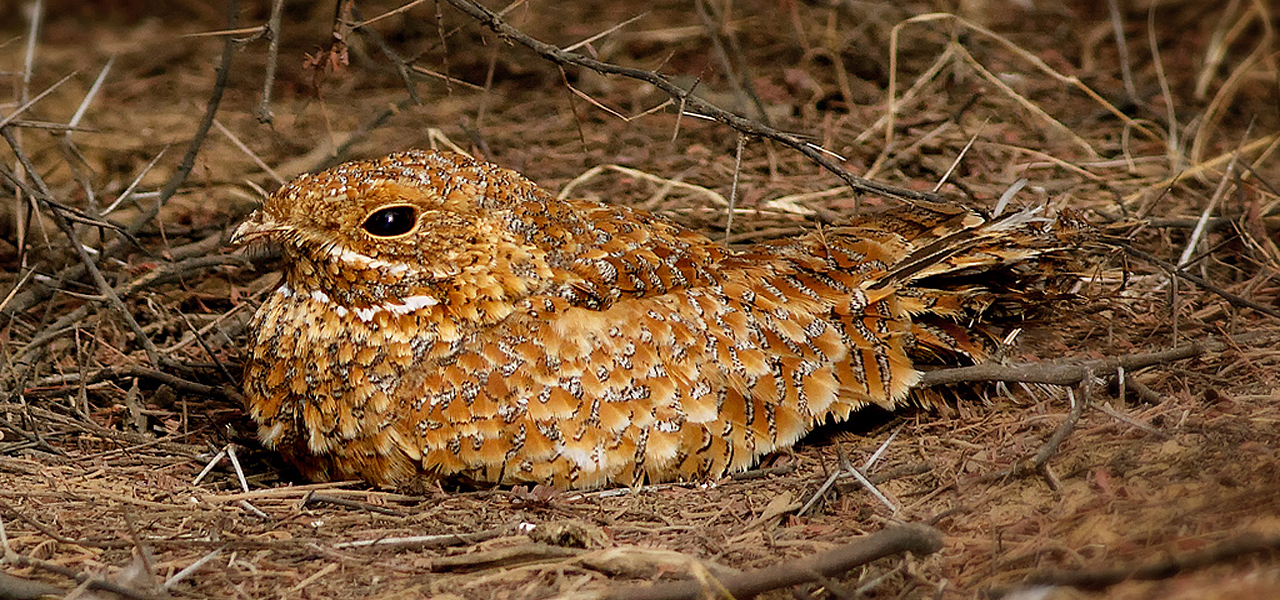
This exciting trip covers a wide range of the Sahel habitats giving the best chance possible of seeing all the target Sahel specialised species. It takes us from the very edge of the Sahara to the wetlands of Djoudj National Park in the North and through the dry bushlands down to the Saloum Delta in South West area, North of The Gambia. The northern section of this huge band is occupied by the Sahara Desert, while the southern section contains the rainforests of the Upper Guinea. Senegal is a very friendly safe country and has only fully opened up to wildlife tourism in recent years. Because of the uniqueness of the habitats and its location, Senegal offers a truly spectacular birding experience and offers a wide variety of very interesting and unique birds and wildlife. On this trip we shall focus on a range of habitats including; dry savannah, dry woodland, grasslands and semi-desert along with some of the most important wetlands in the region. Here we will look for a number of Sahelian and West African specialities that can be difficult to find elsewhere. Some of these will include; Golden Nightjar, Quail-Plover, Cricket Warbler, Sudan Golden Sparrow, Little Grey Woodpecker, Sennar Penduline Tit, Greater Painted-Snipe, Swamp Warbler, Arabian Bustard, White-crested Tiger Heron, Standard-winged Nightjar, Pel’s Fishing Owl, African Finfoot, Mali Firefinch, Sahel Paradise Whydah and Chestnut-bellied Sandgrouse to name just a few. One of the worlds true wildlife spectacle is the visit to a roosting area of hundreds or thousands of Scissor-tailed Kites, an experience of a lifetime. Join us on yet another great Bird’s Wildlife & Nature adventure!
ITINERARY:
Day 1 – Arrival Day – Dakar – 08th Jan
Plan your arrival today at Dakar Airport, Senegal (code DSS). Depending on arrival times birding may be possible locally. We should get an introduction to some of the commoner species and we would hope to encounter Namaqua Dove, Black-crowned Tchagra, Yellow-crowned Gonolek, Black Scrub Robin, Rufous-tailed Scrub Robin, various Sunbirds, Long-tailed Glossy Starling, Cut-throat and Village Indigobird. Overnight at a local comfortable hotel nearby.
Overnight at Near Dakar. D
Day 2 – Around Dakar – 09th
We will start the day just birding from the balcony of our hotel with a cup of coffee. Our guide will play the call of the Pearl-spotted Owlet which should attract a number of species. Often we can see Black-scrub Robin, Cut-throat Finch, Yellow-crowned Gonolek, Beautiful, Scarlet-chested and Pygmy Sunbird, Red-cheeked Cordon-bleu, Little Weaver, Village Indigobird and more. Although we are playing the Owl call to attract other birds, quite often a Pearl-spotted Owlet will come in as well. Senegal Parrot can often be seen flying over and sometimes pearching in trees close to the hotel, as well as Speckled Pigeon that perches on the rooftops. After breakfast we will take a short drive to the National park where we will sped several hours walking through the grasslands in search of more birds. Our first Western Red-billed Hornbills should be around along with the noisy Green Woodhoopoe’s, Abyssinian Roller is often perched up nice for photographs. We should see some more flocks that could include Northern Crombec, Senegal Eromomela, Red-billed Firefinch and Bleating Camaroptera. Once we get close the the cliffs we could also see Blue Rock Thrush, Gosling’s Bunting and some really close views of Little Bee-eater. We will then return to the hotel for lunch. In the afternoon we will relax and photograph some of the birds in the hotel gardens before walking to a local field in the evening where we will hopefully get some good views of Standard-winged Nightjar.
Night Dakar. B, L, D
Day 3 – Dakar – Richard Toll – 10th
An early start this morning to make our way to Richard Toll on south bank of the River Senegal which forms the border with Mauritania. Along the way we will keep an eye open for the first raptors which may include Booted Eagle, many Black Kites and the declining vulture species such as White-backed, Griffon and Ruppell’s Griffon. We may also see Speckle-fronted Weaver, White-billed Buffalo Weaver, Western Red-billed and African Grey Hornbill. We’ll make several stops along the way to break up the 6 hour journey. We should also see Long-tailed Glossy and Chestnut-bellied Starling, various species of migrant warblers and flocks of the beautiful Sudan Golden Sparrow, plus Eurasian Hoopoe, Vinaceous and Laughing Doves along with the handsome Speckled Pigeon. After arriving at the hotel we will head to a local forest, these areas hold a number of the Sahelian specialities such as Cricket Longtail, Senegal Eremomela, Fulvous Chatterer, Sennar Penduline Tit and Little Grey Woodpecker. We may also find Striped Kingfisher, Black-headed Lapwing, Great Grey Shrike, Woodchat Shrike, Yellow-bellied Eremomela, Black Scrub Robin, Northern Anteater-Chat and Bronze-tailed Starling among others.
Night Richard Toll B, L, D
Day 4 – Richard Toll – Podor – 11th
This morning we will depart after an early breakfast and head east to the Podor and Gamadji Sare. Here the landscape becomes more barren with some acacia scrub and the Sahara Desert only a stones throw away. This barren and specialised habit is one of the best places to see very sought after Golden Nightjar which we will look for both in the afternoon and evening. Also in this area we will hopefully encounter Sudan Golden Sparrow, Senegal Batis, Green Wood Hoopoe and Fulvous Chatterer to name a few. The area can also be excellent for European migrants and we would expect to see Great Grey Shrike and Eurasian Wryneck, plus various warblers such as Western Olivaceous, Western Orphean and Western Bonelli’s. Additionally, we will keep an eye out for wheatears and hopefully find Northern, Western Black-eared and possibly even Atlas Wheatear, which has recently been split from Northern and winters in this region of the Sahel. In reality, this area can be very rich in birdlife and anything can turn up. We will also visit a site where we should encounter Little Swift but with careful observation we will find smaller numbers of the very similar Horus Swift which are at their extreme northern part of their range. Night Podor. B, L, D
Days 5 – 6 Podor – Djoudj National Park – 12th – 13th
Today we will depart directly for Djoudj National Park, one of the most incredible wetlands in not only Senegal, but also West Africa. Djoudj National Park is designated a RAMSAR and a UNESCO World Heritage site and we will stay in this important area for two nights. As this is the first freshwater wetland south of the Sahara, it holds vast numbers of wintering Palearctic water birds along with a good selection of West African species. Likely in large numbers here are White-faced Whistling Duck, Garganey, Northern Pintail and Great White Pelicans, with some Pink-backed Pelican mixed in. Other likely species in lower numbers should include; Marbled Duck, Fulvous Whistling Duck, Spur-winged and Africa Pygmy Geese and Knob-billed Duck. Waders will include Black-winged Stilt, Common Ringed Plover, Kittlitz’s Plover, Kentish Plover and Collared Pratincole. Among the collections of waders should also be Little Stint and Black-tailed Godwit to name a few. Additionally, we will encounter countless numbers of egrets, herons, spoonbills, ibis and flamingos. Another Sahelian speciality here is the Black-crowned Crane and, if we time it right the spectacle of the birds leaving their roosting site early in the morning to feed in the rice fields is something you’ll never forget. The whole area will be simply teeming with birdlife. Time permitting, we will take a boat trip to view a Great-White Pelican colony and get closer views of other waterbirds. Aside from the waterbirds the reeds and long grasses edging the wetlands hold good numbers of Winding Cisticola, Sedge Warbler, Great Reed Warbler and hopefully Greater Swamp Warbler, along with African races of Reed Warbler. Raptors will hopefully include 3 species of Harrier and the iconic African Fish Eagle. Away from the wet areas, the driers area are just as productive with huge numbers of Sand Martin present and hopefully, Chestnut-bellied Sandgrouse. Also, and much rarer, we will look for the Arabian Bustard. There are several breeding pairs within the park, although not always easy to find. That said, the area still offers one of the best chances of getting a view of this sadly declining species. There will also be a chance of seeing some mammals in this area, with African Wolf being the highlight, alongside numerous Warthogs.
Nights Djoudj National Park B, L, D
Day 7 – Djoudj National Park – Kaolack – 14th
Today we will make an early start and head south towards the estuary at St Louis, where the Senegal River reaches the Atlantic. We will spend some time exploring the riverbanks and surrounding wetlands, which can be excellent for a variety of waders and other waterbirds. We will carefully check the exposed mudflats, sandbanks and shallow waters for a selection of species, with Caspian Tern and Gull-billed Tern among our main targets. The area can also hold good numbers of gulls, including Grey-headed Gull and Slender-billed Gull, while we will keep a close eye on the flocks in case something less common has joined them. After spending time exploring the estuary, we will take a break before continuing our journey south towards Touba. The scenery will gradually change as we leave the wetlands behind and drive through increasingly dry and barren bush habitat. We will make occasional stops along the way to scan the roadside vegetation and surrounding plains, looking for some of the characteristic species of the Sahel. Cut-throat Finch, Desert Cisticola, Singing Bush Lark and Sahel Paradise-Whydah will all be on our list, and there should be plenty of opportunities to pick up other species as we travel through this fascinating landscape. The open country can also provide opportunities to encounter vultures, particularly if we are fortunate enough to find a carcass. Any gathering of vultures will be worth investigating, as there is always the possibility of finding several species together. We will carefully check the birds for Griffon Vulture, Lappet-faced Vulture and Rüppell’s Griffon, all of which are impressive birds and highly desirable additions to our trip list. As we approach Kaolack, we will reach another area with a reputation for producing one of the Sahel’s most sought-after birds: Quail-Plover. This is a notoriously difficult species to find, being neither common nor regular, and its presence in the area can be heavily influenced by weather conditions during the preceding seasons. Good rainfall can alter the habitat considerably and influence where the birds occur, making their appearance from year to year somewhat unpredictable. If time allows, we will thoroughly explore this location, carefully scanning the dry ground and sparse vegetation for any sign of Quail-Plover. Finding one will certainly require patience and a little luck, but given the scarcity and elusive nature of the species, any sighting would be a particularly rewarding way to finish the day’s birding.
Night Kaolack B, L, D
Day 8 – Kaolack – 15th Jan
Today, after breakfast, we will have the opportunity to make another attempt at finding Quail-Plover, depending on how successful we were during our late-afternoon and evening birding the previous day. This elusive species can take some patience to locate, so we will carefully check the surrounding scrub and open areas once again. While searching, we will also keep an eye out for Temminck’s Courser and any other species that we may have missed during our first visit to the area. There is always the possibility that something new will turn up, particularly as we explore the habitat at a different time of day. Hopefully, having enjoyed good success with our morning targets, we will then set off for our next birding site, which promises to be one of the real highlights of the trip. We will drive south towards the town of Kaolack, arriving with plenty of time to explore the river and its surrounding habitats before making our way out to a small riverine island. The island is the setting for what must surely rank among the great avian spectacles of the region. As the afternoon progresses and the birds begin to gather, we will witness hundreds and potentially even thousands of Scissor-tailed Kites descending towards the island to settle in for the night. Among them will be impressive numbers of Lesser Kestrels, which also gather here to roost. Watching such vast numbers of raptors arriving from all directions, gradually filling the sky before settling onto the island, is an unforgettable experience. The sight and sound of these birds gathering together as dusk approaches is simply magical. The sheer number of birds involved, combined with the spectacle of them circling overhead and descending to their communal roost, makes this a truly memorable wildlife experience and one of the defining moments of the trip. As the light fades, we will have the opportunity to sit back and take in this remarkable natural event, surrounded by one of West Africa’s most impressive concentrations of birds of prey.
Night at Kaolack B, L, D
Days 9 – Kaolack – Wassadou Camp – 16th
This morning we will remain in the Kaolack area and visit a nearby stretch of dry, scrubby habitat. This type of Sahelian landscape can be particularly productive and gives us another opportunity to search for some of the region’s more specialised species. One of our main targets will be Savile’s Bustard, a sought-after Sahelian speciality that can be difficult to find, while we will also have another chance to look for the elusive Quail-Plover. There should be plenty of other birdlife to keep us occupied as we work our way through the scrub. Possible species include Piapiac, White-bellied Bustard, Abyssinian Roller, Woodchat Shrike, Crested Lark and Rufous-tailed Scrub Robin. We will also keep an eye out for Chestnut-bellied Starling, Plain-backed Pipit, Desert Cisticola, Green-winged Pytilia and the striking Sahel Paradise-Whydah. With the mixture of open ground, scattered bushes and scrub, we will take our time exploring the area carefully, as some of the more elusive species can require patience and a good deal of scanning. Once we have thoroughly explored the area, we will begin our journey towards Wassadou Camp. The camp offers relatively simple, basic accommodation, but its location alongside the river more than makes up for the lack of luxury. This is an excellent area for wildlife and gives us access to some highly sought-after species that are difficult to find elsewhere. After arriving and settling in, we will spend part of the afternoon walking a trail that follows the river. The combination of woodland, riverside vegetation and open areas along the trail should provide a good variety of species. We will be looking for Stone Partridge, African Pied Wagtail, Purple Starling, Blackcap Babbler and Violet Turaco, while also making a special effort to find Adamawa Turtle Dove. The riverside can also be alive with activity, and we are likely to encounter Guinea Baboons moving along the riverbank. Their loud calls and distinctive presence are difficult to miss as they patrol the area. As the afternoon progresses, we will gradually make our way back towards camp, timing our return for around dusk. This is an exciting time of day in Wassadou, as the changing light brings a different atmosphere to the river and some of the area’s nocturnal wildlife begins to stir. The trail can offer an excellent chance of encountering one of the trip’s most impressive birds, the magnificent Pel’s Fishing Owl. As darkness approaches, we will carefully scan the riverside trees and perches where this huge owl may emerge to begin hunting along the river. Finding this spectacular species at the end of our walk would be a fitting way to finish what should be a very rewarding afternoon.
Night Wassadou Camp B, L, D
Day 10 – Wassadou Camp – Kedougou 18th Jan
This morning we will take a boat trip along the Wassadou River, spending a couple of hours exploring the river and its surrounding banks. The boat provides an excellent way to experience the area from a different perspective and should give us numerous opportunities to see and photograph some of the region’s most attractive and sought-after species. One of our main targets will be Egyptian Plover, which can often be found along the exposed river edges, where we will carefully scan the sandbars and banks in search of this distinctive species. There should be plenty of other birdlife to keep us busy during the boat trip. We could encounter Violet Turaco moving through the riverside vegetation, while Malachite Kingfishers should provide some excellent photographic opportunities as they perch along the water’s edge. At certain times of year, the river can also hold enormous numbers of Red-throated Bee-eaters, with potentially thousands of birds gathering along the banks and surrounding woodland. Watching such large numbers of bee-eaters moving through the area is always an impressive spectacle. We will also keep an eye out for the secretive African Finfoot, as well as a selection of herons, egrets, waders and other shorebirds that make use of the river and its exposed sandbanks. Once we have completed our boat trip, we will pack up and begin the journey towards Kedougou for the next stage of our trip. We should arrive at our hotel during the afternoon, giving us some time to settle in and relax after the journey. The hotel grounds themselves can be surprisingly productive for birding, and we will have the opportunity to explore the surrounding area and scan the river for any birds passing through. As evening approaches, we will also have the opportunity to look for some of the local nocturnal species. Northern White-faced Owl and Greyish Eagle-Owl are both possible in the area, and with some careful searching and a little luck, we may be able to track down one or both species. This should provide a relaxed but rewarding end to the day before we continue our exploration of the Kedougou region.
Night Kedougou B, L, D
Day 11 – Kedougou – 19th Jan
Today we will spend a full day exploring the Kedougou region, an area characterised by lush, forested foothills, rocky escarpments and a fascinating mixture of habitats. This diverse landscape supports an impressive range of birdlife, and we will spend the day exploring some of the best areas in search of both regional specialities and a number of our key target species. We will begin the morning in a forested area, where the cooler conditions and dense vegetation should provide plenty of activity. Among the species we will be hoping to find are Narina Trogon, Guinea Turaco, Western Plantain-eater, Orange-breasted Bushshrike, Brown-throated Wattle-eye and Senegal Parrot. We will also keep a close eye out for Mali Firefinch and, with some luck, the much sought-after and locally rare Dybowski’s Twinspot. There should be a good variety of other forest and woodland species present, so we will take our time working through the vegetation and listening for calls as we explore. Around midday, we will stop for lunch in a local village. Close to the village is a particular tree that has occasionally produced sightings of the elusive Willcock’s Honeyguide. Although this is never a guaranteed species, the location gives us another opportunity to look for this unusual and rarely encountered bird while also enjoying a chance to experience some of the local surroundings. During the afternoon, we will move to a very different habitat, where dry scrub meets the dramatic rocky face of the surrounding mountains. This change in habitat should bring a different selection of species, and we will spend some time searching for several of our remaining targets. Gosling’s Bunting will again be high on our list, along with Senegal Batis, Cut-throat Finch and Neumann’s Starling. The rocky slopes and scrubby vegetation can be particularly productive, and we will work the area carefully, keeping an eye out for birds moving through the bushes, along the rock faces and overhead.
Night Kedougou – B, L, D
Day 12 – Kedougou – Wassadou Camp – 20th
We will spend the morning birding close to our hotel, where we will once again focus on some of the area’s key target species, including Gosling’s Bunting and African Golden-breasted Bunting. With a little patience and some careful searching, there should also be opportunities to encounter a variety of other birds in the surrounding habitats before we set off for Wassadou Camp again. We will then make the drive back to Wassadou, where this time we will take an afternoon boat ride along the river. Although we will be exploring the same stretch of river as before, the experience can be remarkably different later in the day. The changing light brings a completely different atmosphere, and the warmer afternoon and evening tones can be particularly rewarding for photography. One of the highlights will be the large colony of Red-throated Bee-eaters, which can look especially spectacular as they gather along the riverbanks and return to their roosting areas. We will also keep an eye out for other species that become more active as the day progresses. One of the biggest advantages of the afternoon boat ride is that we can remain on the river until dusk and into the early evening. This gives us another excellent opportunity to search for the magnificent Pel’s Fishing Owl, one of the most sought-after species of the trip. As darkness approaches, we will carefully scan the trees for this impressive owl, while also watching for any other wildlife coming down to the river to drink. Mammals can be particularly rewarding at this time of day, and there is always the possibility of an unexpected encounter as the light begins to fade.
Night Wassadou – B, L, D
Day 13 – Wassadou Camp – Kaolack – 21st
After breakfast we will begin the journey back to Kaolack which will take up a lot of our day. Once we have arrived at the hotel there will be time to relax in the hotel and we can once again do some birding around the hotel if time permits.
Night Kaolack. B, L, D
Day 14 – Kaolack – Toubacouta – 22nd
We will depart Kaolack in the morning and if time permits we might have the option to try for Quail-Plover again if we have not already seen it on our previous attempts. We will then head southeast to the village of Toubacouta where we will check into our stunning hotel for our final couple of nights of the tour. Once we have unpacked, in the afternoon we will have a boat trip on the delta. We will relax on the boat as we scan the mangroves for the rare White-crested Tiger Heron. We will be on the water for a few hours and may also have opportunities to see Goliath Heron, West African Crested Tern and more.
Night Toubacouta. B, L, D
Day 15 – Toubacouta – 23rd
Today we will have a full day in the area. We will have the option of another boat trip today if we did not previously see the Tiger Heron. We will then spend what time we have left in the day visiting some local woodland sites not far from our hotel where we can look for species like Yellow-crowned Gonolek, Swallow-tailed Bee-eater, Senegal Parrot, Green Wood Hoopoe, African Golden Oriole, Yellow-billed Shrike, Glossy-backed Drongo and Bearded Barbet. We will the return to the hotel to relax or even do some birding around the grounds where we can get species like Red-billed Firefinch, Red-cheeked Cordon-bleu, Village Indigobird, Village Weaver, Bronze Mannikin, Lavender Waxbill and Pygmy Sunbird.
Night Toubacouta. B, L, D
Day 16 – Toubacouta – Dakar – 24th
Today we will return to Dakar in time for our international departures.
tour details
Species of interest
Leaders: Tom Bird & Local Guide
Tour price: £4,875
Single supplement: £385
Deposit: £500
Group size: Minimum for tour to go ahead – 4
Included in cost: Accommodation in twin rooms en-suite, all meals from dinner on 08th to lunch on the 23rd, transfers, ground transport throughout, all park entrance fees, boat trips, water, and services of English-speaking leaders, and local guides
Not included: International airfare, insurance, drinks, tips, and items of a personal nature.
Accommodation: Most of the hotels and lodges are of a good standard and offer en-suite rooms, and a good variety of meals. The accommodations in Djoudj and Wassadou are more basic, but the only places to stay that are close to the sites we wish to visit.
Highlights:


Quail-Plover
Golden Nightjar
Scissor-tailed Kite
Arabian Bustard
Sennar Penduline Tit
Cricket Warbler
Temminck’s Courser
Atlas Wheatear
River Prinia
Allen’s Gallinule
Egyptian Nightjar
Marbled Duck
Sudan Golden Sparrow
African Pygmy Goose
Sahel Paradise Whydah
African Fish Eagle
Black Scrub Robin
Cut-throat Finch
Lesser Flamingo
African Finfoot
Carmine Bee-eater
White-crested Tiger Heron
Savile’s Bustard
Chestnut-bellied Sandgrouse
Black-crowned Crane
White-bellied Bustard
Little Grey Woodpecker
Horus Swift
Greater Painted Snipe
Senegal Batis
Fulvous Babbler
Knob-billed Duck
Desert Cisticola
Lesser Kestrels
Singing Bush Lark
Greater Swamp Warbler
Pink-backed Pelican
African Crested Tern
Goliath Heron
Patas Monkey
Red-throated Bee-eater
African Golden Wolf
Tour Code: This tour is focuses on seeing some very sought after and iconic species in what is a relatively new destination for birders, but one that is seeing a huge amount of interest. Because Senegal’s ’special’ birds are well spread across the country, the tour does involve extensive driving with a few long travel days. However, these will be broken with birding stops to stretch legs and eat lunch. The pace will be slow and we will even have several relaxing boat trips. The hotels are of a surprising good standard, and only two places offer more basic accommodation, both of which are in fabulous birding sites.
Once the tour is confirmed to go ahead, we will send you information about booking your flights. Please do not book flights until you receive this information from us.
Final payment will be due 90 days before start of tour.
Please note rules and regulations are constantly changing so you will need to check with Country and Governmental guidelines. At present we will all have to abide by safety rules and protocols set by the Government of the country we are visiting; this may include wearing of masks and hand sanitizing especially within restaurants and public areas. If any of these rules are required you will need agree and adhere to this before we can accept you on a Bird’s, Wildlife & Nature Tour.
All details concerning what to bring, airport transfers, health, wildlife checklists etc will be sent out once the tour is confirmed and we have received your final balance.
Insurance: We strongly recommend that you take out adequate travel insurance to protect you against any unforeseen event including travel delay, injury or illness prior to or during the tour. Note to check if your insurance covers you against expenses incurred due to contracting Covid-19 either before or during the tour.
Click on the booking form above to reserve your place on this tour
This tour is being run through – Bird’s, Wildlife & Nature LTD
44 Courtland Crescent, Plymouth, Devon UK PL7 4HL
For more information. Contact:
Tel: Tom 07481 843971 Tel: Steve 07780 965129
Outside UK – Tom +44 7481 843971 Steve – +44 7780 965129
